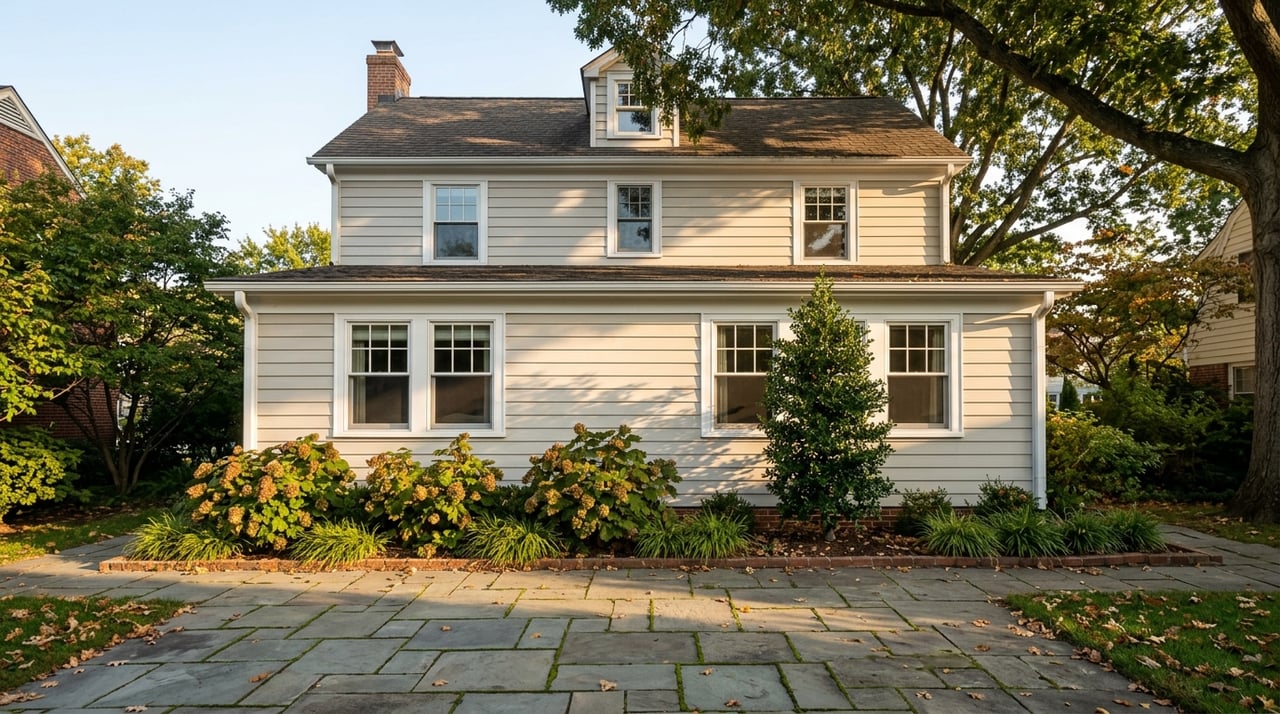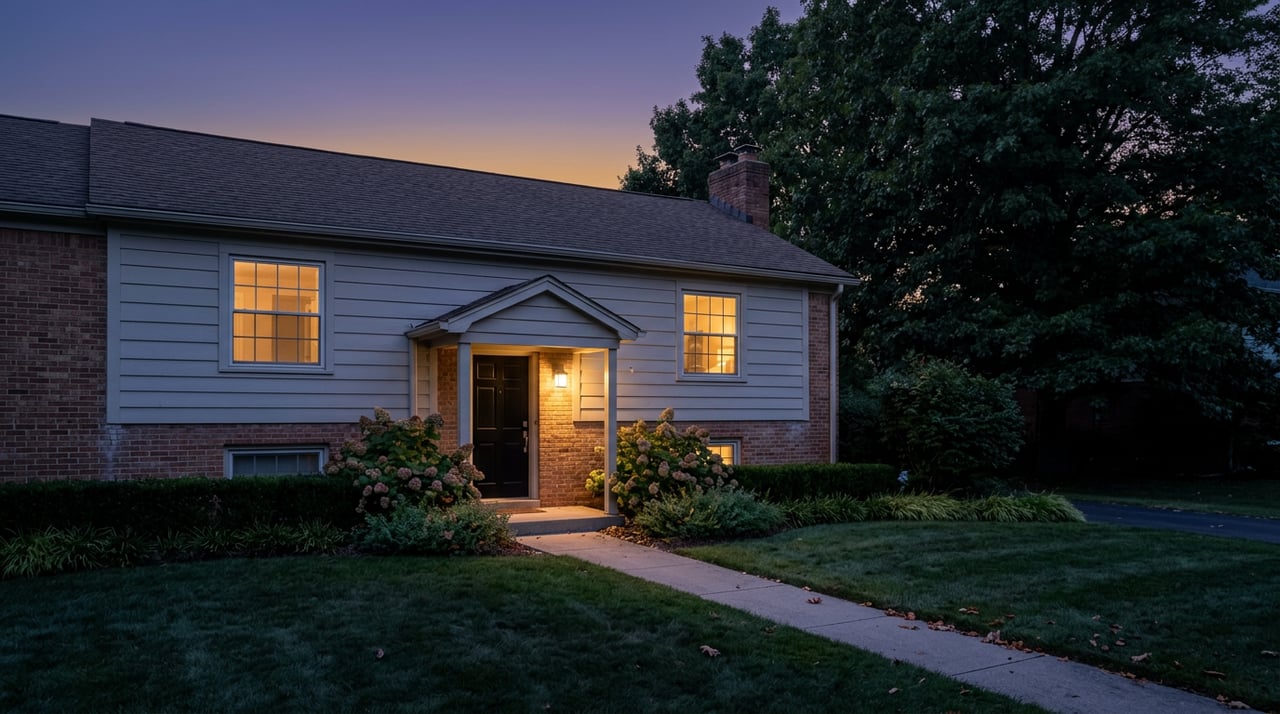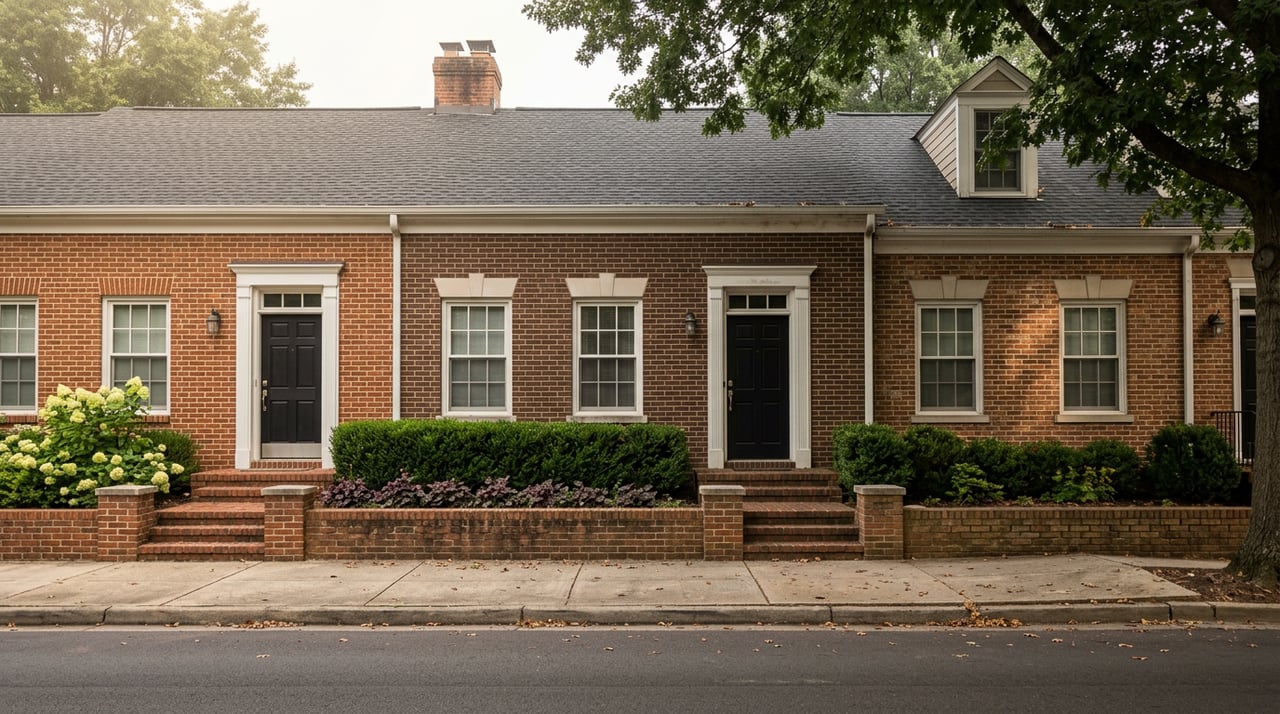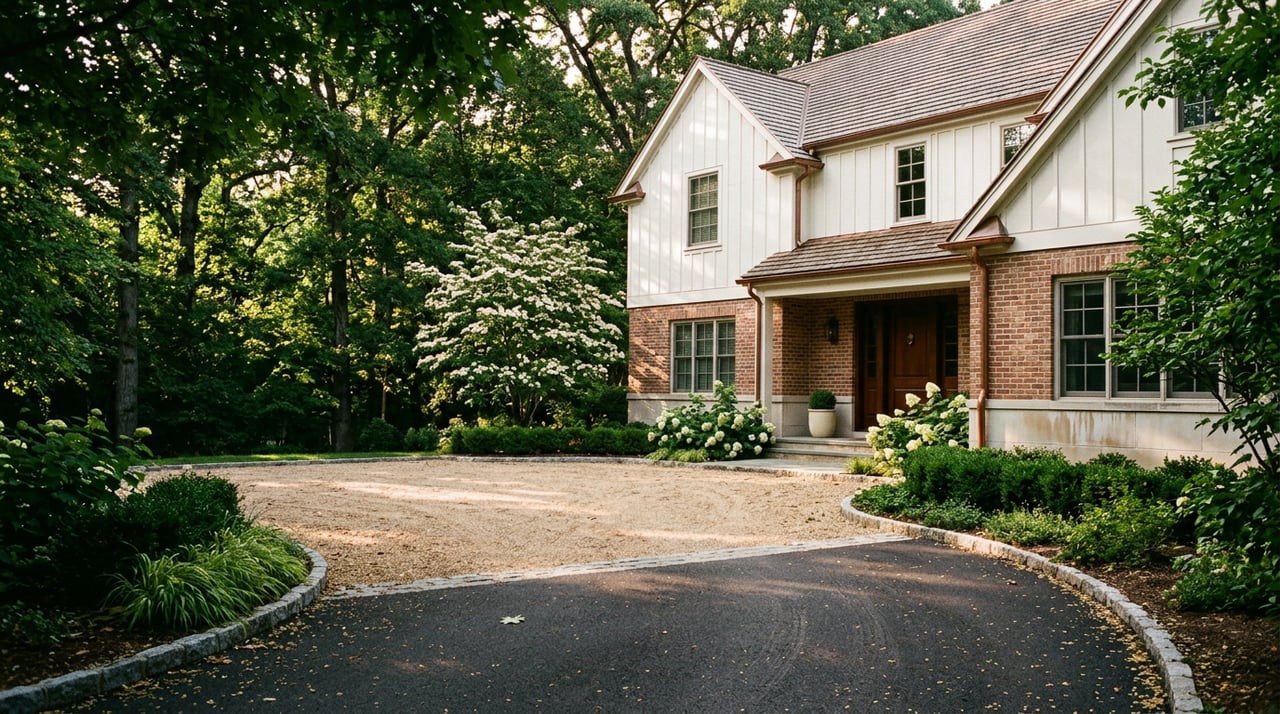
The Fairfax County market as a whole moved at a median of about 25 days on market over the three months ending May 2026. In Fairfax Station, homes sold in roughly twice that time, closer to 54 to 56 days as of early 2026. That gap is not a mystery of taste. It is what happens when a $1M-plus home on an acre-plus lot has to prove out its private well, its onsite septic system, and the paper trail the county keeps on both before a buyer will release contingencies.
Here is the thesis, stated plainly: in Fairfax Station, the ratification-to-close window is where transactions stall, and the well and septic documentation you assemble before listing is what decides whether that window holds. Almost every friction below is either eliminated or dramatically shortened by paperwork you can gather now.
The 30-day clock most sellers do not see coming
Under paragraph 17(b) of the Virginia REALTORS Form 600 sales contract, the seller has to deliver a certificate showing no evidence of malfunction or needed maintenance of the sewage system, dated not more than 30 days before settlement, from the Virginia Department of Health, a local health department, or an acceptable private company. The Home Inspection Contingency Addendum (Form 600D) separately preserves the buyer's right to conduct their own septic inspection at their expense, and it puts responsibility for any damage caused by that inspection on the buyer.
Two things follow from that structure.
First, the 30-day certificate is on a rolling clock tied to settlement, not to ratification. If closing slips a week, an older certificate can fall out of window and force a re-inspection. Second, the certificate is not the same document as the buyer's inspection. You can hand the buyer a clean certificate and still watch their inspector probe a drain field or lift a distribution box lid.
The takeaway is not to skip the certificate. It is to know that in Fairfax Station, where lots are large and systems are older, the certificate is the floor and the buyer's inspection is the ceiling. Sellers who plan only for the floor lose renegotiation leverage the moment the ceiling turns up something.
Bedroom capacity: the line item that quietly re-prices a listing
Every conventional or alternative onsite sewage system permitted through the Fairfax County Health Department is approved for a specific bedroom count. That number lives in the county's Planning and Land Use System (PLUS) file for the property. If a home is marketed as a five-bedroom but the septic file shows approval for four, the listing has a misrepresentation problem, and the buyer's lender may refuse to move until it is reconciled.
Two scenarios trigger this in Fairfax Station regularly:
- A finished lower-level room with a closet and egress being counted as a bedroom for MLS purposes when it was never part of the septic design.
- A home built or expanded in the 1970s or 1980s where an addition added living space but the septic approval was never amended.
The fix is not complicated when it is caught early. Pulling the PLUS permit file before listing, matching the approved bedroom capacity to the marketing description, and either adjusting the description or filing for an amended approval is a two-week project pre-listing and a two-month problem post-ratification.
What Chapter 68.1 actually requires, and what it does not
Fairfax County Code Chapter 68.1 requires onsite sewage systems that do not carry a Virginia Pollutant Discharge Elimination System permit to be pumped out at least once every five years, with the licensed contractor entering the pump-out record into PLUS. Alternative Onsite Sewage Systems have a stricter schedule: annual inspection and sampling every five years, with reports due to the county by the 15th of the month after inspection.
What the code does not do is require a pre-sale inspection. The Virginia Department of Health has said as much on its own guidance page. That gap is exactly why paragraph 17(b) matters: state law leaves the certification question to the contract, and the contract puts it on the seller.
For a Fairfax Station listing, the practical pre-market document stack looks like this:
| Document | Where it lives | Why a buyer's agent will ask for it |
|---|---|---|
| Original septic construction permit and as-built | Fairfax County Health Department, PLUS | Confirms system type, bedroom capacity, drain field location |
| Most recent pump-out record within 5 years | PLUS Pump-Out Entry Record | Satisfies Chapter 68.1 and lender questions |
| AOSS annual inspection reports, if applicable | Health Department, filed monthly | Proves ongoing compliance |
| Well construction permit | Fairfax County Chapter 70.1 file | Confirms depth, casing, and yield |
| Recent water quality test with bacteriological panel | Private lab or Health Department | Answers the first question every buyer asks |
| Paragraph 17(b) certificate, dated within 30 days of settlement | Ordered pre-settlement | Contractually required at closing |
None of these are exotic. All of them take longer to obtain under a ratified contract than they do standing still.
The for-sale well evaluation is worth its price
Fairfax County offers a for-sale well evaluation through the Health Department that includes bacteriological testing. In a market where the buyer pool is often relocating from municipal water systems and has real anxiety about private wells, presenting a clean, recent evaluation at the listing appointment removes the single most emotional objection a Fairfax Station buyer raises. It also short-circuits the buyer's own well test, which if it comes back showing coliform, kicks off a chlorination cycle that can take a week to fully flush and re-sample.
The Health Department's Division of Environmental Health, at 10777 Main Street in Fairfax, runs the program and can be reached at 703-246-2201. Permits for well construction, and any related site work, are issued under Fairfax County Chapter 70.1 and are not transferable between owners.
What a licensed inspector will actually do
Under Virginia rules, a septic inspection has to be performed by an accredited septic system inspector or someone holding a valid onsite sewage system operator, installer, or onsite soil evaluator license. Costs in the Fairfax area typically run $200 to $600 depending on scope and access.
The scope options range widely, and the Northern Virginia Association of REALTORS has been direct about the mechanics:
A vacant property leaves the seller, the buyer and the inspector in a precarious position as the system can't be evaluated under a normal load.
For an occupied Fairfax Station home with recent maintenance, a walkover paired with a probe of the drain field and a look inside the tank often satisfies both the certificate and the buyer's inspector. For a home that has been vacant during estate settlement, or for a system installed in the 1970s where the tank is concrete and the drain field has decades of vehicular compaction from the driveway above it, plan on a comprehensive inspection with distribution box lift.
The failing-system scenario, and why to know about it early
If a pre-listing inspection surfaces a failing system, the Fairfax County Soil and Water Conservation District administers cost-share programs for homeowners repairing or replacing failing systems near waterways. Whether a specific property qualifies depends on proximity to a designated stream and the nature of the failure. What matters at the listing stage is that the option exists, the paperwork takes time, and a buyer who discovers a failing system at their own inspection has enormous leverage. A seller who discovers it first has options.
Sequencing that protects the timeline
- Week 1 to 2 before listing. Pull the full PLUS file for the property. Reconcile bedroom capacity with the intended MLS description.
- Week 2 to 3. Order a pump-out if the last record is approaching five years, and confirm the contractor enters the record into PLUS.
- Week 3 to 4. Order the county for-sale well evaluation and a bacteriological water test.
- Week 4 to 5. Commission a pre-listing septic inspection with a licensed evaluator, scope matched to the system's age and condition.
- Post-ratification. Order the paragraph 17(b) certificate on a schedule that lands it inside the 30-day settlement window.
Done in that order, the listing goes live with an assembled disclosure packet, the buyer's inspector finds a system that has already been examined, and the 30-day certificate becomes a formality rather than a scramble.
FAQ
Does Fairfax County require a septic inspection before I list? No. Chapter 68.1 requires a pump-out every five years and record entry into PLUS. The pre-sale inspection is driven by the Virginia REALTORS contract, not the county code.
What if my septic permit shows fewer bedrooms than my home has? Talk to your agent before the listing description is written. The permit can sometimes be amended based on a soil re-evaluation, or the home can be marketed to match the approved capacity. Marketing above the approved capacity is not an option.
Can the buyer waive the paragraph 17(b) certificate? Yes. The parties can strike paragraph 17(b) and 17(c) or address septic through an addendum. The buyer's inspection rights under Form 600D still apply unless separately waived.
Are AOSS homes harder to sell? Not inherently, but they carry annual inspection and five-year sampling obligations under Chapter 68.1. Buyers financing with certain loan products will ask for the last two years of reports. Have them ready.
If you own a home in Fairfax Station and you are within a year of listing, the well and septic paperwork is the single most productive project you can start now. Pat Fales and Pam Morgan Associates coordinates the PLUS file pulls, county evaluations, and pre-listing inspections that keep your ratification-to-close window on schedule. Contact us to build the pre-market packet before the market clock starts running.