If you are thinking about selling your Springfield townhome, preparation can make a real difference. In a market where buyers compare homes quickly online and in person, small details can shape how fast your home sells and how strong your offers look. With the right plan, you can focus your time and budget on the updates that matter most. Let’s dive in.
Why prep matters in Springfield
Springfield townhomes are competing in an active market where presentation counts. Current local data shows 47 active townhouses in Springfield, with a median listing price of $650,000 and typical marketing time of about 15 days, while the broader Springfield market posted a median sale price of $684,160 over the three months ending in April 2026.
That means buyers are seeing multiple options and making quick comparisons. Northern Virginia inventory is still below a balanced market, but attached homes make up a large share of current supply, so your townhome needs to stand out for the right reasons.
Fairfax County also reported a 2026 mean assessed value for townhomes of $612,580, up 3.90% countywide. That does not set your sale price, but it does give helpful context for the price range many townhome sellers are working within.
Focus on what buyers notice first
When buyers walk into a townhome, they tend to notice the spaces that carry the most visual weight. National staging research found that the living room, primary bedroom, and kitchen are the rooms buyers care about most.
In a Springfield townhome, those priorities usually extend to the main living level, stairways, and primary suite. Because townhomes often have a more compact layout, clutter, worn finishes, and oversized furniture are easier to spot.
This is why thoughtful preparation matters more than trying to do everything at once. If your budget or timeline is limited, start where buyers will look first and where photos will work hardest for you.
Start with the main living areas
Your living room often sets the tone for the showing. Make it feel open, bright, and easy to understand by removing extra furniture, clearing surfaces, and creating a simple furniture arrangement that shows the flow of the room.
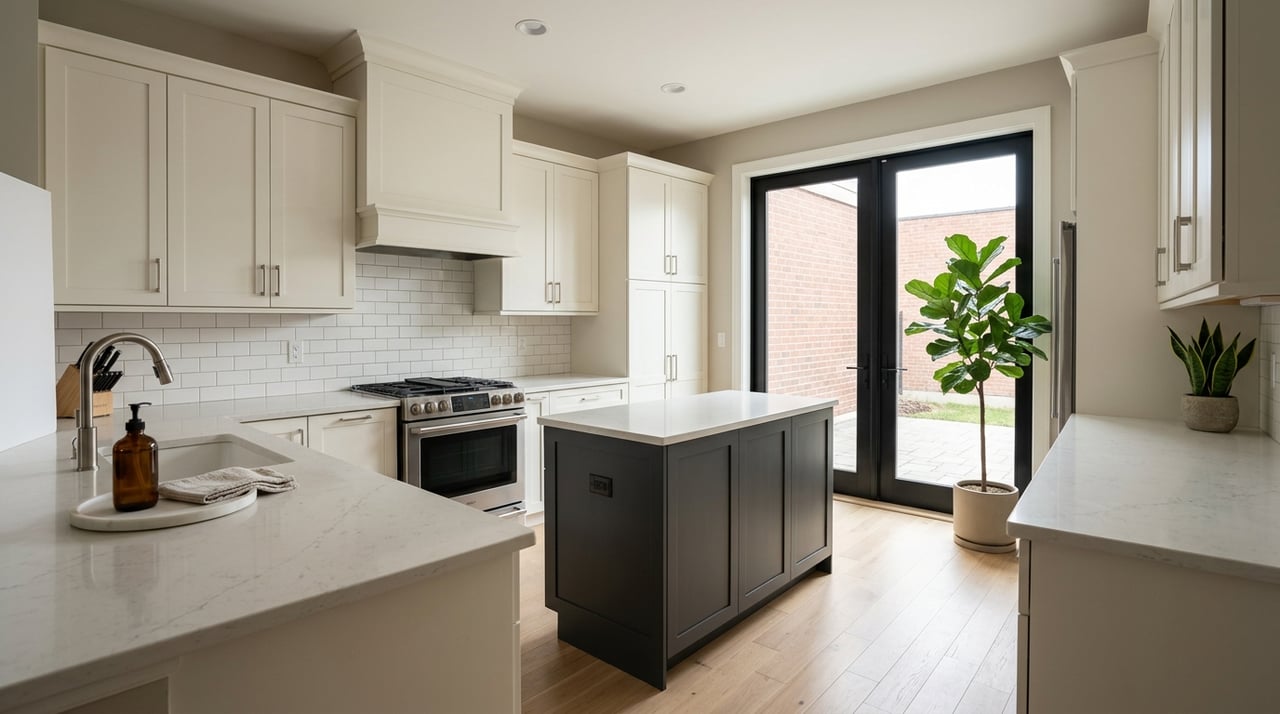
The kitchen should look clean, functional, and cared for. Clear off counters, remove magnets and papers, and keep only a few simple items out if needed. Buyers want to see workspace, storage, and light.
In the primary bedroom, aim for calm and spacious. Neutral bedding, limited decor, and clear walking paths can make the room feel larger and more inviting.
Declutter for space and photos
Most buyers begin their search online, so your home has to look good on a screen before it ever gets a showing. High-resolution photography and video are now a central part of the sales process, and the camera tends to exaggerate clutter and awkward furniture placement.
That is why decluttering is not just about tidiness. It helps your rooms feel larger, cleaner, and easier for buyers to picture as their own.
A few smart steps can go a long way:
- Remove extra furniture from tighter rooms
- Clear kitchen and bathroom counters
- Open blinds to bring in natural light
- Take down distracting art or personal items
- Remove magnets, notes, and small visual clutter
- Organize shelves, closets, and entry areas
The goal is not to make your home feel empty. The goal is to make it feel easy to walk through, easy to photograph, and easy to imagine living in.
Handle the small repairs early
In Virginia, buyers are reminded through the residential property disclosure framework to do their own due diligence, including inspections and other property checks where relevant. That means obvious maintenance issues can quickly become negotiation points.
You do not need a full remodel to make a strong impression. In many cases, small repairs and cosmetic improvements do more to support your sale than expensive projects.
Focus first on visible, fixable issues like these:
- Patch nail holes or wall damage
- Touch up or refresh paint in neutral tones
- Replace burned-out light bulbs
- Tighten loose hardware
- Repair leaky faucets
- Refresh worn caulk
- Clean grout, trim, and baseboards
These updates help your home feel move-in ready. They also show buyers that the property has been cared for.
Keep updates simple and consistent
When sellers are deciding what to improve, consistency usually matters more than trend-chasing. Fresh neutral paint, brighter lighting, cleaner flooring, and a more unified look from room to room often have the biggest visual payoff.
That is especially true in a townhome, where one level flows into the next and buyers can take in a lot at once. Competing paint colors, dated fixtures, or too many style changes from room to room can make the home feel busier than it is.
Simple choices tend to photograph better and appeal to a wider group of buyers. Think clean, light, and cohesive rather than overdesigned.
Make sure the online presentation matches reality
It is tempting to chase a picture-perfect listing, but accuracy matters. Industry coverage in 2026 warned that heavily altered listing photos can leave buyers feeling misled when the home looks different in person.
A better approach is to prepare the home well before photos are taken. Clean, declutter, stage thoughtfully, and let the photography reflect the real condition and strengths of the property.
That creates trust from the start. It also helps attract buyers who are responding to what your home actually offers, not a version that only exists online.
Gather HOA and home records before listing
For many Springfield townhomes, paperwork is a key part of a smooth sale. If your property is in a common interest community, Virginia law requires disclosures related to that status, and the seller or seller’s agent must obtain a resale certificate from the association and provide it to the buyer.
That resale certificate can include governing documents, assessments, special assessments, reserve studies, budgets, insurance information, board minutes, and rules involving signs, parking, and rentals. If required disclosures are missing, buyers may have cancellation rights.
Because of that, it is smart to gather association information early. It can save time and reduce stress once your home is on the market.
Other records worth pulling together include:
- Permits for completed work
- Contractor invoices
- Appliance manuals
- Transferable warranties
- Records showing upgrades were completed properly
Good documentation helps answer buyer questions faster. It also helps reduce surprises during the contract period.
Use a practical prep timeline
Selling prep is usually easier when you spread it out. If you know a move may be coming, even a rough timeline can help you stay organized and avoid last-minute pressure.
6 to 12 months before listing
Walk through your townhome like a buyer would. Make note of worn paint, dated lighting, flooring issues, caulk, hardware, and any maintenance items that could stand out during showings.
This is also a smart time to request HOA records if your community requires them. Early planning gives you more time to make decisions without rushing.
3 to 6 months before listing
Finish the visible touch-ups that shape first impressions. This is the ideal window for painting, lighting updates, flooring improvements, caulk refreshes, and other cosmetic fixes.
Once that work is done, shift to deep cleaning and decluttering. Less visual distraction and better light can make your home read larger and cleaner both online and in person.
2 to 4 weeks before listing
Now is the time to stage the rooms that matter most. Focus on the living room, primary bedroom, and kitchen first, then make sure stairways and connecting spaces look open and tidy.
Photography and video should happen only after the home is fully show-ready. That helps your marketing reflect the strongest possible version of your property.
What really helps a Springfield townhome stand out
For most sellers, the strongest results come from condition, clarity, and documentation rather than a major renovation. Buyers want a home that feels cared for, easy to understand, and ready for the next chapter.
That means your time is often best spent on decluttering, repairs, paint, lighting, staging, and paperwork. Those are the steps that help your townhome compete well in a fast-moving Springfield market.
If you are planning a sale in Springfield, having a clear prep strategy can make the process feel much more manageable. Pat Fales and Pam Morgan Associates helps Northern Virginia sellers prepare thoughtfully, market confidently, and move forward with experienced guidance.
FAQs
What should I fix before selling a Springfield townhome?
- Focus first on visible issues such as wall patches, paint touch-ups, loose hardware, dead bulbs, leaky faucets, worn caulk, and areas that need deep cleaning.
Which rooms matter most when staging a Springfield townhome?
- The living room, primary bedroom, and kitchen usually deserve top priority because buyers tend to focus on those spaces most.
How far in advance should I prepare my Springfield townhome for sale?
- A practical timeline is 6 to 12 months for planning and paperwork, 3 to 6 months for repairs and cosmetic updates, and 2 to 4 weeks for staging and photography.
Do I need HOA documents to sell a Springfield townhome?
- If your townhome is in a common interest community, Virginia law requires specific disclosures and a resale certificate from the association.
Do professional photos matter when selling a Springfield townhome?
- Yes. Most buyers shop online first, and high-quality photos and video help your home make a strong first impression before a showing is scheduled.