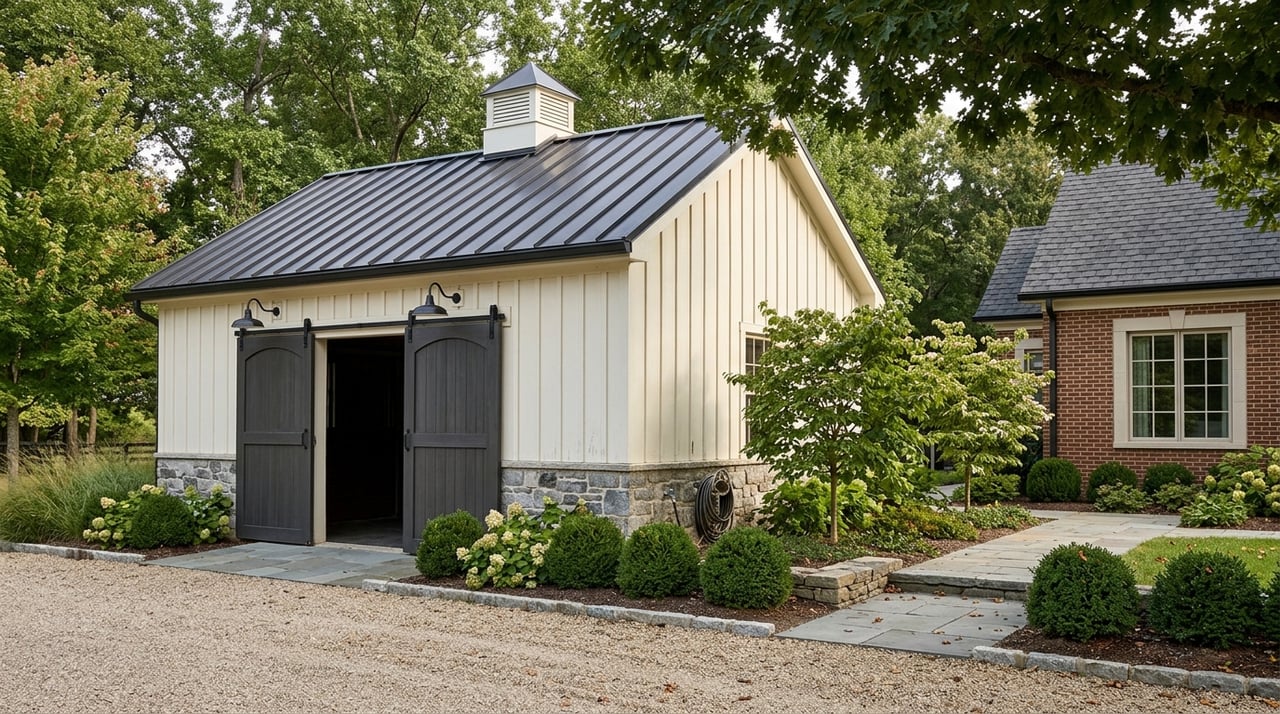
Wondering whether Clifton is the right place for a horse property or small-acreage home? You are not alone. Buyers often start with a simple goal, like finding room for horses, a barn, or a little more land, but quickly learn that Clifton properties come with unique rules, land-use questions, and planning details. This guide will help you understand what to look for, what questions to ask, and how to approach the search with confidence. Let’s dive in.
Why Clifton draws acreage buyers
Clifton stands out because it offers a different feel from many nearby suburban areas in Fairfax County. The town itself is very small, about one-quarter of a square mile, and it is designated as a historic district on both the Virginia Landmarks Register and the National Register of Historic Places.
That historic setting, along with the surrounding acreage opportunities tied to the 20124 search area, attracts buyers who want more land and a more rural property layout. At the same time, Clifton is not one single property type. The local market can include standard suburban homes, small-acreage properties, and larger horse-oriented parcels.
Start with town versus county
If you are shopping for an equestrian or small-acreage home in Clifton, the first question is not about the house. It is about jurisdiction. A Clifton mailing address does not automatically mean the property is inside the Town of Clifton.
That distinction matters because the rules can be very different. The Town of Clifton says buyers should verify whether a property is actually inside town boundaries by checking the Fairfax County parcel profile. If the district field says Springfield Town of Clifton, the parcel is inside town and subject to town ordinances and architectural guidelines.
What being inside town means
Inside the Town of Clifton, land-use restrictions can be stricter than in some nearby parts of Fairfax County. The Historic Overlay District covers all land within the town, so exterior changes may involve added review.
In the town’s Residential District, permitted uses include single-family dwellings, accessory buildings, and boarding or maintaining horses on a lot of no less than two acres. At the same time, the district minimum lot size is five acres, with frontage and lot width requirements that also affect what can be built.
The Agricultural District also allows uses tied to farming and horse keeping, including farming, livestock raising, forestry, floriculture, wayside stands, and boarding horses. That district also has a five-acre minimum lot size.
You may still see smaller parcels inside town. That is because the town code preserves some older nonconforming lots, which helps explain why current listings may not always match today’s minimum lot standards.
What being outside town means
If the property is outside the Town of Clifton, Fairfax County rules usually apply. For buyers looking at horse use, this can open up a different set of standards tied to lot size and intended use.
In Fairfax County, livestock may only be kept on lots of two acres or greater. The county also limits density to one animal unit per acre, and horses, ponies, mules, burros, and donkeys fall within that category.
If you want to board horses for others or offer riding lessons, another layer applies. Fairfax County says limited riding or boarding stable rules may apply depending on the size of the lot and the activity proposed.
How lot size affects horse use
Acreage is one of the biggest filters when you search Clifton horse properties. The reason is simple: the allowed use often changes based on parcel size.
Here is a practical snapshot of how local rules can shape your options:
| Property location | Basic horse-related rule |
|---|---|
| Town of Clifton, Residential District | Boarding or maintaining horses is permitted on a lot of no less than two acres |
| Town of Clifton, Agricultural District | Boarding horses is permitted; five-acre minimum lot size applies |
| Fairfax County outside town | Livestock allowed on lots of two acres or greater, with one animal unit per acre |
| Fairfax County, limited boarding use | On lots of two to less than five acres, up to five horses may be boarded |
| Fairfax County, larger boarding use | On lots of five or more acres, up to eight horses may be boarded |
These are starting points, not the whole story. The exact location of the parcel, the zoning, and the intended use all matter.
Clifton listings can vary widely
One challenge for buyers is that the 20124 search area can mix very different property types together. Recent search results have included homes on about 0.23 acres, properties on just over 2 acres, 5-acre new construction, and land parcels approaching 10 acres.
That means your online search can quickly blur the line between a suburban home with extra yard space and a true horse-ready property. A home that looks promising in photos may not have the lot size, site layout, or approvals needed for your plans.
Horse properties need more than open land
Many buyers picture a house, a pasture, and a fence. In reality, horse-oriented properties usually need a more complete site plan.
In Fairfax County, horse farm management guidance recommends rotational grazing, multiple heavy-use or sacrifice areas, and regular waste removal. The county also notes that small horse farms often need a dedicated non-grassed heavy-use area so horses can be exercised when pastures are wet, recovering, or in drought.
That is why small-acreage horse properties often involve more than the main home. You may need to evaluate barns, fenced turnout areas, pasture layout, hay storage, and space for manure or compost handling.
Site layout matters as much as acreage
A property can have enough acreage on paper and still fall short in practice. Streams, floodplain, steep slopes, tree cover, and drainage can reduce how much usable space you really have for pasture, barns, or turnout areas.
Clifton’s subdivision rules specifically aim to preserve historic and environmental features such as tree cover, steep slopes, streams, and floodplains. For buyers, that means a parcel’s usable land can matter more than the raw number of acres.
Outside town, Fairfax County also says barns and other animal-sheltering structures have location regulations. So even if a home is already standing, future improvements may still depend on where those structures can actually be placed.
Approvals can affect your plans
If you are buying in the Town of Clifton, approvals are a major part of the conversation. The town says new construction, additions, fences, sheds, and other exterior changes can trigger a use permit, Architectural Review Board review, or both.
For example, fences over 6 feet need a use permit, and sheds of 100 square feet or more need ARB review. Setbacks are also strict, and if a planned improvement falls into a setback, you may need a zoning variance from the Board of Zoning Appeals.
This is one reason buyers should avoid assuming that a future barn, new fence, or expanded outbuilding will be simple. Even small changes can involve review before you move forward.
Utilities can shape what is possible
For vacant land or major future plans, water and septic questions matter early. In the Town of Clifton, a new house on a vacant lot must have an adequate septic field and water well.
The town also says public sewer is only available to existing buildings that meet county administrative guidelines. So if you are comparing properties for long-term use, utility capacity is not a side detail. It can be a deciding factor.
Business use changes the path
Some buyers want a private property for personal horse use. Others hope to board horses, teach lessons, or operate a home-based business tied to the property.
That is where the rules can change quickly. In town, home businesses require a use permit and are limited by size, visits, signage, and hours. In Fairfax County, boarding or lesson activity may fall under limited riding or boarding stable rules and may require approval and a conservation plan.
If your vision goes beyond personal residential use, it is smart to confirm the permitting path before you commit to a property. What works for private horse keeping may not work for a business use.
A smart Clifton buyer checklist
When you tour equestrian or small-acreage homes in Clifton, keep your due diligence focused on the land as much as the house. A beautiful home does not always mean the property supports your long-term goals.
Here are some of the key items to verify:
- Whether the parcel is inside the Town of Clifton or outside town in Fairfax County
- The zoning district and current permitted uses
- Lot size and whether the parcel has any nonconforming status
- Historic Overlay requirements if the property is inside town
- Rules affecting fences, sheds, barns, and accessory structures
- Water well and septic capacity, especially for vacant land or expansion plans
- Streams, floodplain, steep slopes, and other features that affect usable land
- Whether your intended horse use is personal, boarding, lessons, or another use with added approvals
Why local guidance matters
Clifton horse and acreage properties can be rewarding, but they are rarely simple. These purchases involve more than square footage and finishes. You are also evaluating land use, utility setup, approvals, site planning, and long-term upkeep.
That is why specialized guidance can make such a difference. A property search in this niche may involve the town clerk, Planning Commission, Architectural Review Board, Board of Zoning Appeals, Fairfax County zoning staff, building officials, or conservation-related review, depending on the parcel and your plans.
For buyers who want clarity before making a move, that kind of local understanding matters. If you are exploring equestrian or small-acreage homes in Clifton, Pat Fales and Pam Morgan Associates can help you evaluate the property itself and the practical questions that come with it.
FAQs
Can you keep horses on a Clifton property under five acres?
- Yes, in some cases, but it depends on whether the property is inside the Town of Clifton or outside town in Fairfax County, along with the parcel’s lot size, zoning, and intended use.
What should you verify before buying a horse property in Clifton?
- You should confirm town versus county jurisdiction, zoning, lot size, nonconforming status, utility capacity, approval requirements, and environmental features that may limit usable land.
Do Clifton horse properties usually need well and septic systems?
- Some do, especially inside the Town of Clifton where new houses on vacant lots must have an adequate septic field and water well.
Can you add a barn or fence to a Town of Clifton property without approval?
- Not always. In town, fences, sheds, additions, and other exterior changes may require a use permit, Architectural Review Board review, or both.
Can you board horses or offer riding lessons on a Clifton acreage property?
- Possibly, but the answer depends on the parcel location, lot size, and exact proposed use, with different rules inside the Town of Clifton and in Fairfax County outside town.