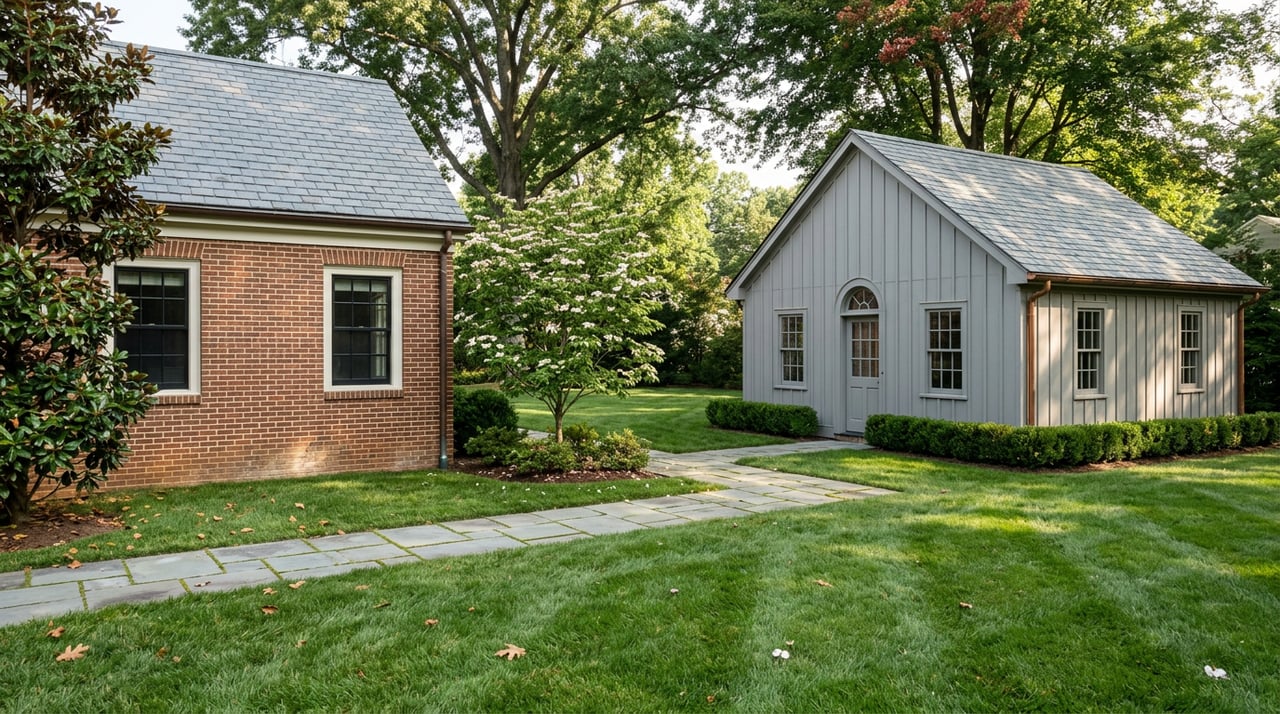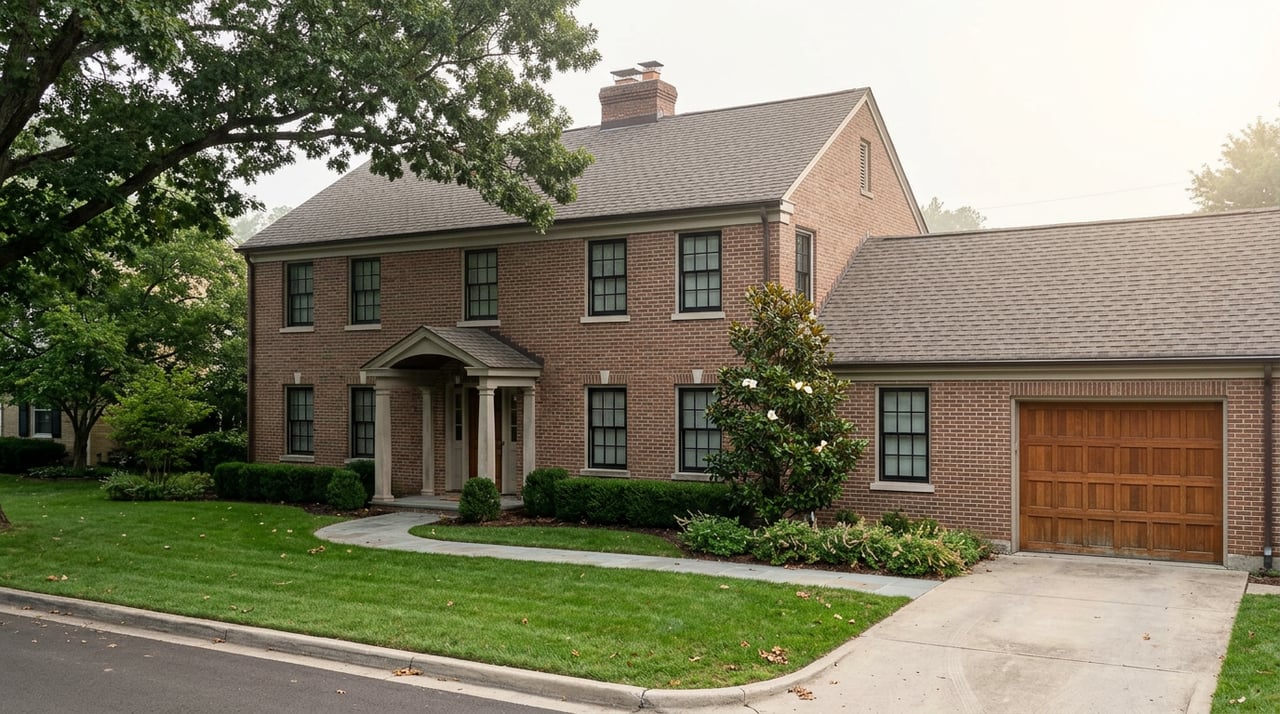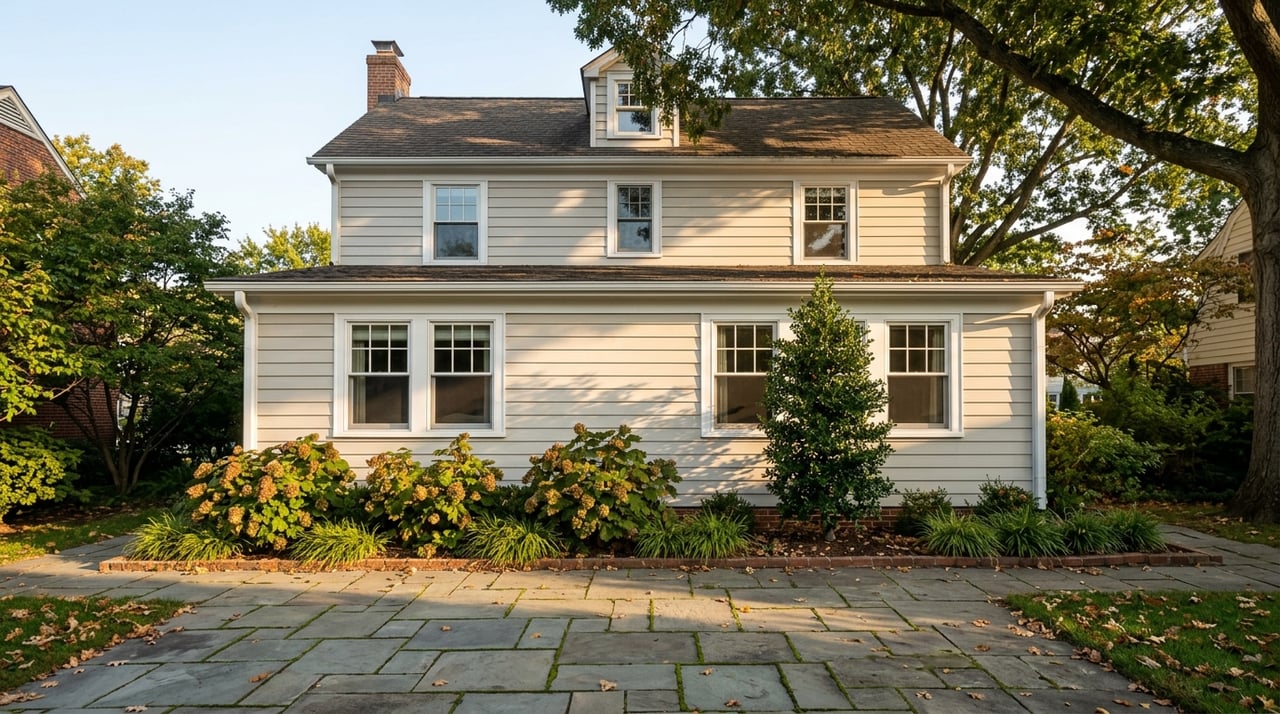
Every seller-prep checklist says the same thing: paint the front door, swap out tired windows, tighten up the roofline, add a fence if the yard needs definition. It is standard advice because it works. In most of Northern Virginia, a homeowner can start that project the same week a listing agent walks the property.
In the historic core of the City of Fairfax, that timeline runs into a wall the generic checklists never mention. Before a contractor touches a window, a door, a roof, or a fence that faces a public street, the work usually needs a Certificate of Appropriateness from the city's Board of Architectural Review. Skip that step and a seller can end up with a beautifully finished project and a stop-work order, right when the goal was to get the house market-ready on schedule.
Two governments, one address
The confusion starts with something most buyers and sellers never think about: the City of Fairfax is not part of Fairfax County. It is an independent city with its own government, its own building department, its own zoning code, and its own review boards. A house with a Fairfax mailing address in Oakton or Fairfax Station is permitted through Fairfax County. A house inside the actual city limits, including Old Town, goes through the City's own Office of Code Administration instead.
The two governments even set different tax rates. For fiscal year 2026, Fairfax City Council set a real estate tax rate of $1.150 per $100 of assessed value, a few cents higher than the $1.1225 rate Fairfax County adopted for the same fiscal year. Neither number is dramatic on its own, but it is a useful reminder that "Fairfax" is doing double duty as a name for two separate jurisdictions with two separate rulebooks. A seller who assumes county rules apply because the address says Fairfax can lose real time finding that out.
The line that actually matters
Inside city limits, there is a second layer of geography that matters even more than the city line: whether a specific parcel sits inside the Old Town Fairfax Historic Overlay District, its buffering Transition Overlay District, or neither.
| Zone | What it covers | Review required for exterior work |
|---|---|---|
| Historic Overlay District | The historic core of Old Town | Yes, Certificate of Appropriateness from the BAR |
| Transition Overlay District | A buffer area around the historic core | Yes, including signage |
| Architectural Control Overlay District | Corridors, multi-family buildings, and townhouses citywide | Yes, for those specific building types |
| Everywhere else in the city | Single-family detached homes outside the overlays | No BAR review required |
That last row covers a lot of the city. Neighborhoods like Mosby Woods, with its roughly 537 homes from the early 1960s, Country Club Hills, Cobbdale, Fairfax Woods, Fairchester Woods, Green Acres, Layton Hall, Farrcroft, and Fairfax Villa sit outside the historic overlays entirely. A seller prepping a single-family home in any of those areas can move through a standard curb-appeal punch list without a BAR filing. The added step is real, but it is also narrow. It applies to a specific footprint of the city, not the whole thing.
What actually needs sign-off before you list
Something worth clearing up before it trips anyone up: paint color itself is not the problem. The city's own Old Town Small Area Plan planning update, last revised in July 2025, notes that property owners are generally unrestricted in the colors they choose for their homes in the historic core, and no concerns about that freedom have come up in the city's ongoing planning discussions.
The friction sits in the physical changes, not the palette. Inside the Historic Overlay District, a Certificate of Appropriateness is typically needed before work begins on:
- Replacement windows or doors
- Roofing changes
- New or replaced fencing
- Rear additions or bump-outs
- Exterior signage, including signs for home-based businesses
Interior work is a different story. A kitchen remodel, a bathroom reconfiguration, a finished basement, none of it triggers BAR review as long as the changes stay inside the walls. For a single-family detached home outside the overlay districts, exterior work does not need BAR review either. The rule is specific to exterior changes visible from a public street inside the mapped historic zones, and it stacks on top of, rather than replaces, the normal building permits a project already needs.
The boundary that could move under sellers this year
Here is the part that generic historic-district guides rarely cover, because it only shows up in city planning documents. The Old Town Small Area Plan Implementation Guide, updated by the city in the summer of 2025, flags an open question still on the table for 2026: whether to redraw the local Historic Overlay District boundary to align with a revised National Register Historic District boundary, once that federal designation is finalized.
The two boundaries already differ slightly, and a consultant survey by EHT Traceries did not recommend simply matching the National Register lines to the existing overlay. That leaves the boundary question unresolved as part of a broader zoning ordinance update the city has tied to its Small Area Plan work.
One distinction is worth sitting with here. Being added to the National Register does not, by itself, change what an owner can do with a property. The city's own guidance is direct on this point: National Register status opens the door to preservation tax credits, but it carries no regulatory teeth. The Historic Overlay District is the one that does, because that is the boundary the BAR actually enforces. A seller doing exterior prep work right now, particularly on a parcel near the edge of the current overlay, has a good reason to confirm which side of that line the property sits on before signing a contract for new siding or a fence.
How the review actually plays out
The process is not designed to be adversarial, and a recent case shows how a well-documented request moves. On October 15, 2025, the Board of Architectural Review approved a façade renovation at 4150 Chain Bridge Road, inside the Old Town Fairfax Transition Overlay District. The project removed old signage, cleaned the brick without painting it, and updated exterior paint and lighting to prepare the space for two incoming tenants, Zaytuna Mediterranean Bistro and Chill Zone Cafe. Staff recommended approval, and the board voted unanimously, attaching two conditions: general conformance with the plans already submitted, and securing all remaining zoning approvals and permits before construction.
That last condition is the one sellers should note. BAR approval is a single step, not the finish line. It sits alongside, not instead of, the standard construction permits a project needs from the city's Office of Code Administration.
Timing it against a listing date
None of this makes selling inside Old Town Fairfax harder in any lasting sense. It means the sequence of a pre-listing project needs to run in a different order than it would in a county neighborhood. A Certificate of Appropriateness application has to be prepared and submitted before a contractor starts, not after, and confirming a property's overlay status is worth doing at the very start of prep, especially while the city is still weighing where that boundary line will eventually sit.
FAQ
Does a kitchen or bathroom remodel need BAR approval before I list? No, as long as the changes stay inside the home. Interior work does not go through the Board of Architectural Review anywhere in the city.
My home is in Mosby Woods or Fairfax Villa. Does any of this apply to me? Generally no. Those neighborhoods sit outside the Historic Overlay and Transition Overlay Districts, so single-family detached homes there are not subject to BAR review for exterior work.
How do I find out if my property is inside the overlay district before I start a project? The city's Community Development and Planning staff can confirm a parcel's overlay status, and the Board of Architectural Review page on the city's website outlines the review process and exceptions in detail.
Could my property be added to the historic district even though it isn't in one now? It is possible, though the city's own FAQ notes that most properties currently inside a district are expected to stay there, while properties just outside the boundary could be added as part of the boundary review tied to the Old Town Small Area Plan.
If you are weighing pre-listing work on a home in or near Old Town Fairfax and want to sort out what actually needs approval before your contractor starts, Pat Fales and Pam Morgan Associates can help you sequence the project against your timeline so nothing holds up your closing date. Contact Us.